Unlocking Change Potential: Fostering Collaboration for Organizational Success

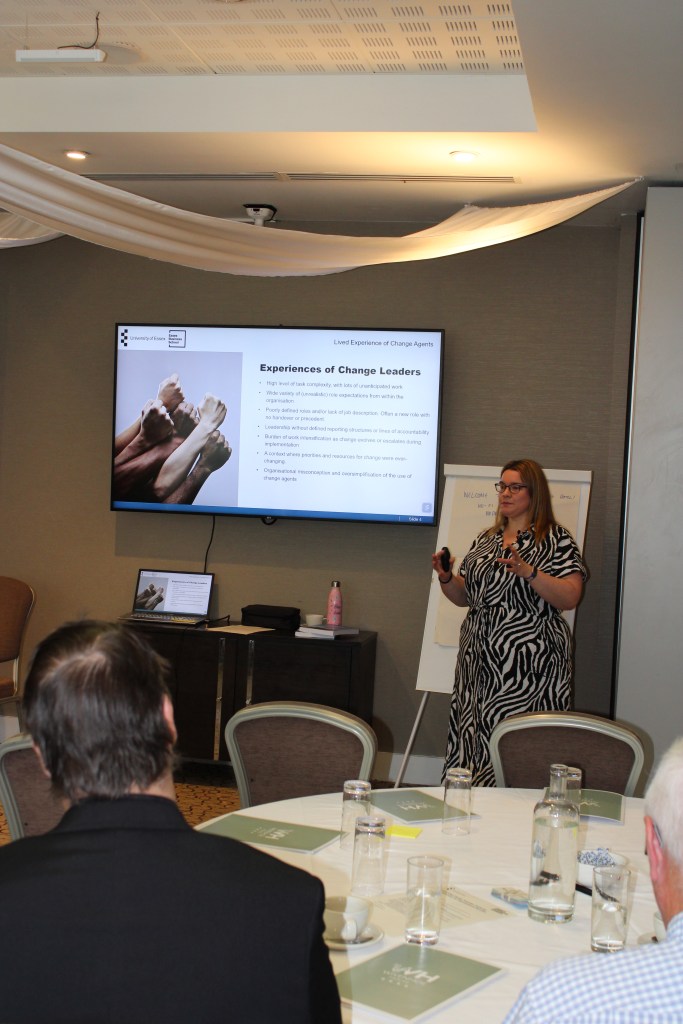
On Tuesday 25th June we hosted our event Unlocking Change Potential: Fostering Collaboration for Organizational Success. We welcomed local industry partners and local businesses to join us for an interactive discussion and expert presentations. I presented an update on my latest research findings and best practices in change management derived from a two year British Academy funded research project, Paul Richard Kelly talked to participants about our new book, and Elaine Yerby hosted a panel including Victoria Collier, Stefano Cirella and Nicole Noble about collaboration and change.

This event gave me the chance to speak directly to business owners about what qualities they think make a good change agent.

All businesses need change to grow and thrive and often, someone is employed especially to make that change happen (or someone within the organisation becomes that change agent). But what makes a change agent good at what they do?

This is a question I have long been researching and I wanted to host an event which not only allowed me to speak directly with local business owners but also gave me the opportunity to share findings from my recent British Academy Fellowship project.

During this project, in collaboration with Inoapps Limited, a consultancy organisation which specialises in supporting the implementation of Oracle applications, I developed a Change Agent Toolkit.

Now was my chance to put this Toolkit into practice and to show business owners how it could help them.

It’s all about change

We had around 30 businesses attend the event, called ‘Collaborating to Unlock the Potential of Change’, and, to begin, I asked participants to consider change in their own organisation. I asked them to reflect on the following four questions:

1. What perspective do I want my change agents to bring to the role?

2. What level do I want them to work at to create change?

3. What role do I want my agent to play?

4. What personal attributes, experience and knowledge do they need?

Following these reflections, I asked them to pick their top three priorities from a selection of 30 essential qualities that a change agent would need to tackle a specific change project in their company. Here is what we found…

Top three qualities

1. There was a general agreement across groups about the importance of what participants described as ‘soft skills’, attributes such as being likable, able to influence and convince others, and commanding the respect of peers within the organisation were very popular choices. Many participants shared that where knowledge could be acquired, a change agent who had these soft skills would help build trust, reduce resistance, and create a positive atmosphere that is conducive to successful organisational change.

2. We explored a variety of perspectives on how ‘opinionated’ we would want a change agent to be. Some participants argued that an ‘opinionated’ change agent would provide clear direction and a sense of purpose to drive change forward, would inspire confidence and effectively advocate for change. On the other hand, other participants were concerned that being too opinionated could lead to resistance, conflict, and alienate some team members who may feel that their ideas and concerns are not being heard.

3. It was suggested that a change agent who had ‘low ego’ would be an asset to most change scenarios. Describing someone as ‘low ego’ typically means that the person is humble, not self-centred, and doesn’t let their personal pride or self-importance dominate their behaviour or interactions. A ‘low ego’ individual tends to value teamwork, be open to feedback, be empathetic, collaborative, and flexible. Being ‘low ego’ was often a quality associated with some of the other soft skills mentioned previously such as being approachable, reliable, and focusing on collective goals and the well-being of the group.

It was a productive and insightful event. The ideal change agent then is maybe not quite what you would expect. Someone who has soft skills, isn’t overly opinionated and who has a ‘low ego’ seemed to be the preference of the day.

Our conclusion from the day was that if you’re looking to enhance your change management strategy, consider incorporating these qualities into your team.

For more information about our change agency approach to change, please see Organizational Change Management: Inclusion, Collaboration and Digital Change in Practice.

If you couldn’t make it to the event and would like to see the slides, you can find them here


Special Issue: The Strategy and Change Interface: How are ‘Enabling’ Processes and Cognitions Related and Used?

Special Issue: The Strategy and Change Interface: How are ‘Enabling’ Processes and Cognitions Related and Used?

Guest Editors: Angelina Zubac, Marie Dasborough, Kate Hughes, Zhou Jiang, Shelley Kirkpatrick, Maris G. Martinsons, Danielle Tucker, Ofer Zwikael

I am delighted to announce the publication of our special issue in Management Decision Volume 59, issue 3

The aim of this special issue is to better understand the strategy and change interface, in particular, the (sub) processes and cognitions that enable strategies to be successfully implemented and organizations effectively changed. The ten papers selected for this special issue reflect a range of scholarly traditions and, thus, as our review and integration of the relevant literatures, and our introductions to the ten papers demonstrate, they shed light on the strategy and change interface in starkly different ways. Collectively, the papers give us more insight into the recursive activities, and structural, organizational learning and cognitive mechanisms that are encouraged or deliberately established at organizations to allow their people to successfully implement a strategy and effect change, including achieve greater levels of horizontal alignment. Moreover, they demonstrate the benefits associated with establishing platforms and/or routines designed to overcome decision-makers’ cognitive shortcomings while implementing a strategy or making timely adjustments to it. We conclude our editorial by identifying some yet unanswered questions.

If you would like to read our editorial in full, please see here

Louder than Words Podcast – ‘The Great Reset’ or Business as Usual?

Join Dr Louise Nash and myself as we discuss whether the pandemic been a trigger for real change in where and how we work, or a temporary intermission from traditional work practices with Professor Jules Pretty on the Louder than Words Podcast.

Accompanying blog post originally posted on University of Essex blog here on 29 September 2022.

Photo by Marc Mueller on Pexels.com

Louder than Words Podcast – ‘The Great Reset’ or Business as Usual?

Working from home due to the COVID-19 pandemic characterised working life for many since the extraordinary events of 2020 unfolded. The rhythms of daily life were drastically and suddenly altered. Spatial rhythms changed as people worked in their domestic spaces and adapted to other people’s use of shared space, and temporal rhythms changed as different working patterns emerged. For non-essential workers, lockdown offered an opportunity to reconfigure working lives away from the constraints of commutes, everyday work settings and ‘presenteeism’. Now the workforce is waiting to see how many of these new patterns will shape our working lives moving forward. Has the pandemic been a trigger for real change in where and how we work, or a temporary intermission from traditional work practices?

Prior to the pandemic, partial homeworking had been considered as a pivotal strand of the aspirational work-life balance. Research considered the emancipatory opportunities that such a working life might offer. Such flexible forms of work detached from traditional urban workplaces have long been interesting to scholars researching the quality of work and where it takes place. As a result of the pandemic, swathes of the global workforce have worked from home, encompassing a huge range of industries and jobs. This explosion of homeworking stimulated commentary and studies concerned with productivity, hybridisation of the workforce, changing workplace geographies and inequalities – particularly in relation to gender.

Has the change been as profound and long lasting as was initially predicted?  In the podcast, we argue that we seem to be in a period of stasis as organisations rein back on many offers of flexibility, and workers are once again exhorted to get back to the office, not only to benefit from collaboration with others, but to spend money in city centres. Hybrid working is still with us, but the rhetoric around home working is becoming less favourable.

Our research leads us to hope that some things may change in how we craft our working lives, post pandemic. The key points we discuss in the podcast include:

Trust:  Organisations need to build on the trust that emerged during the pandemic. Flexible working has frequently been determined by the quality of the relationship between employees and the organisation, and more specifically the trust that line managers and colleagues have in individuals working away from direct supervision and in spaces less easily accessible to monitoring. Many of the perceived barriers which were said to render remote working impossible have faded away as people learned to design their working lives differently. Employees have had the opportunity to show that they can work remotely with success. This trust in people’s skills, experience and ability to manage their own lives should remain.

In the podcast, we discuss how the stories that organisations tell about themselves about how people are assumed to work best have been disrupted by change. The assumptions and narratives that underpin these stories (e.g. employee are more productive in the office), may have changed and new norms and expectations need to be developed. These may be different to how they were before and we argue they should be focused on a more individual’s experiences and inclusive listening. 

More listening to what works as change unfolds, and more modelling from leaders. What we have we learnt from the last few years in change management research is the value of listening and incorporating people’s individual experiences in setting the boundaries and preferences for working lives. Any opportunity for two-way communication from popular forms of consultation (staff meetings, working focus groups, etc.), in the online environment have become less meaningful and no longer provide real voice to employees. We argue that organisations need to develop a culture of listening, listening to each employee’s story and voice. They need to proactively support employees by listening and understanding their individual experiences and circumstances. 

This is a chance for organisations to reset the basis of their relationships with employees about when and where work is undertaken. The future is still unknown, but we hope, it will be one where leader’s model more inclusive ways of work.

I’ll be attending the 84th Annual Meeting of the Academy of Management (AOM 2024) in Chicago, 9-13th August 2024

I’m delighted to announce that I will be heading to Chicago this summer to attend the Academy of Management Annual Conference, which has been a regular feature of my academic calendar for the last 15 years. This year’s theme Innovating for the Future invites members to examine the interplay of innovation, policy, and purpose as a lens for rethinking conventional ways of leading, managing, and organizing (AOM, 2024).

I currently have two sessions accepted for the conference (more details to come once programme is confirmed):

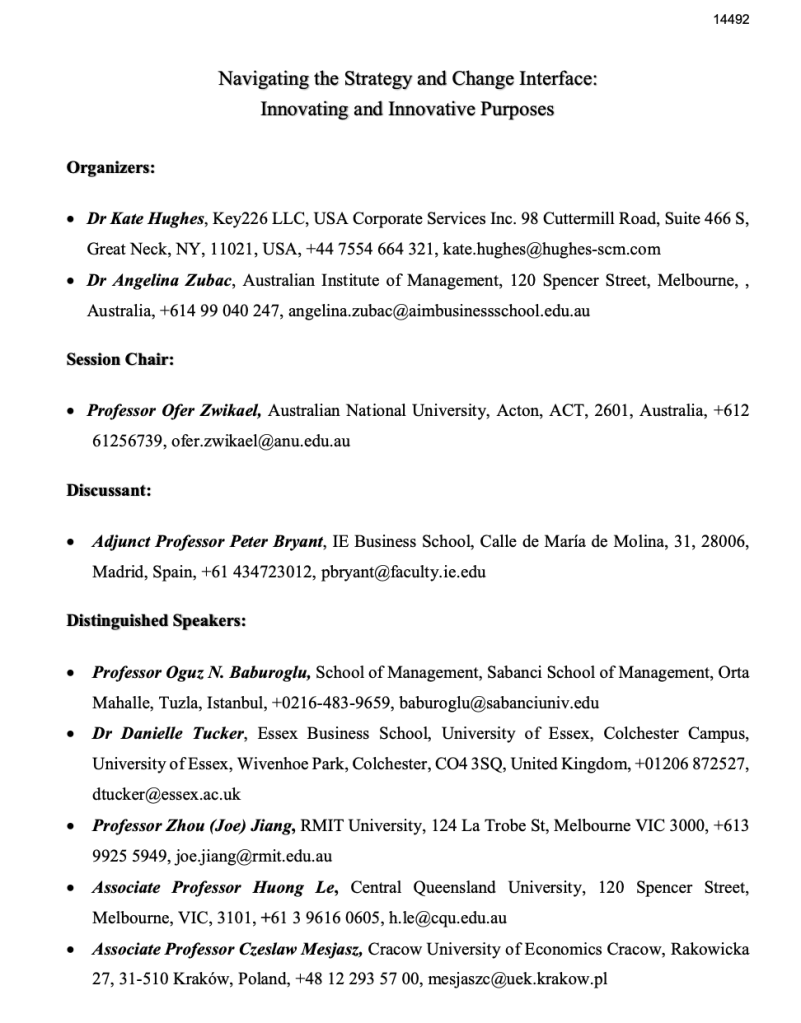
Navigating the Strategy and Change Interface: Innovating and Innovative Purposes

I’ll be joining regular colleagues Dr Kate Hughes and Dr Angelina Zubac for our eighth caucus which brings together scholars from strategy implementation and organizational change disciplines to examine the interface between our disciplines. Each year, this caucus examines a management theory topic from a multi-discipline perspective. This year, the focus will be Innovating and Innovative Purposes, following with the conference theme.

I will be a distinguished speaker at the Caucus, where I will offer my thoughts on the following questions:

  1. What is an innovative purpose, and what role does the external environment play?
  2. Do product, business model and management innovations have the same underlying innovative purpose(s)?
  3. What theories could be important when studying innovative purpose(s)?

The session will be chaired by Professor Ofer Zwikael and Professor Peter Bryant will act as a discussant.

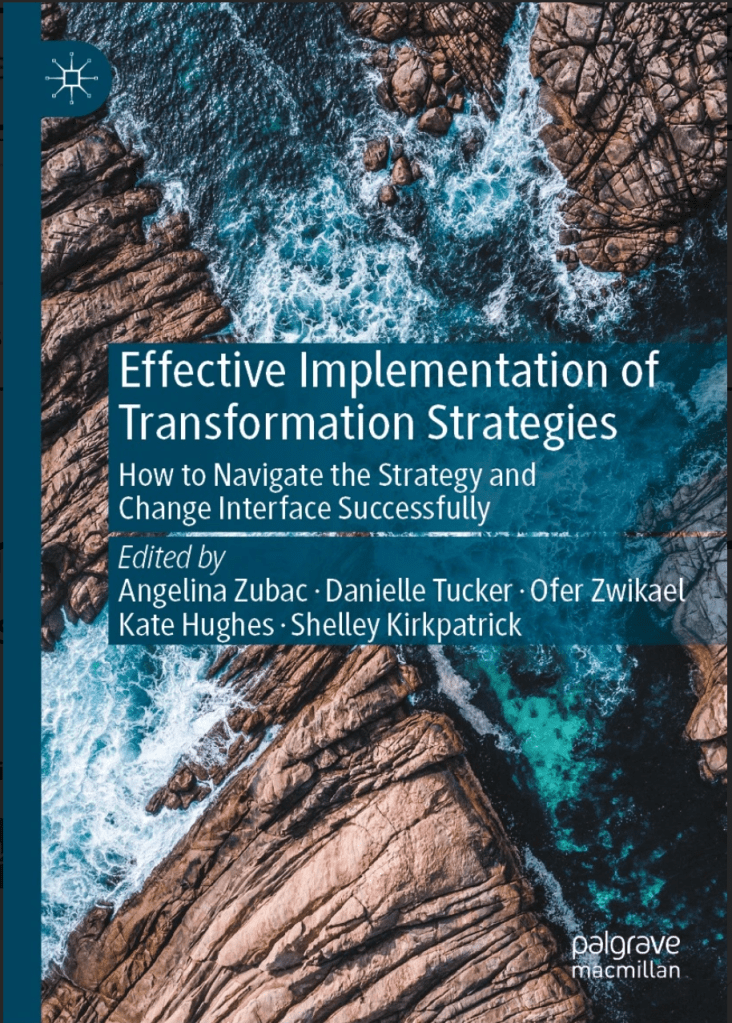
Previous iterations of this Caucus have produced an edited book and special issue of a journal from speakers and participants:

Effective Implementation of Transformation Strategies: How to Navigate the Strategy and Change Interface Successfully. Editors: Angelina ZubacDanielle TuckerOfer ZwikaelKate HughesShelley Kirkpatrick. Palgrave Macmillan

Special Issue: The Strategy and Change Interface: How are ‘Enabling’ Processes and Cognitions Related and Used? Management Decision: Volume 59 Issue 3 Guest Editors: Angelina Zubac, Marie Dasborough, Kate Hughes, Zhou Jiang, Shelley Kirkpatrick, Maris G. Martinsons, Danielle Tucker, Ofer Zwikael

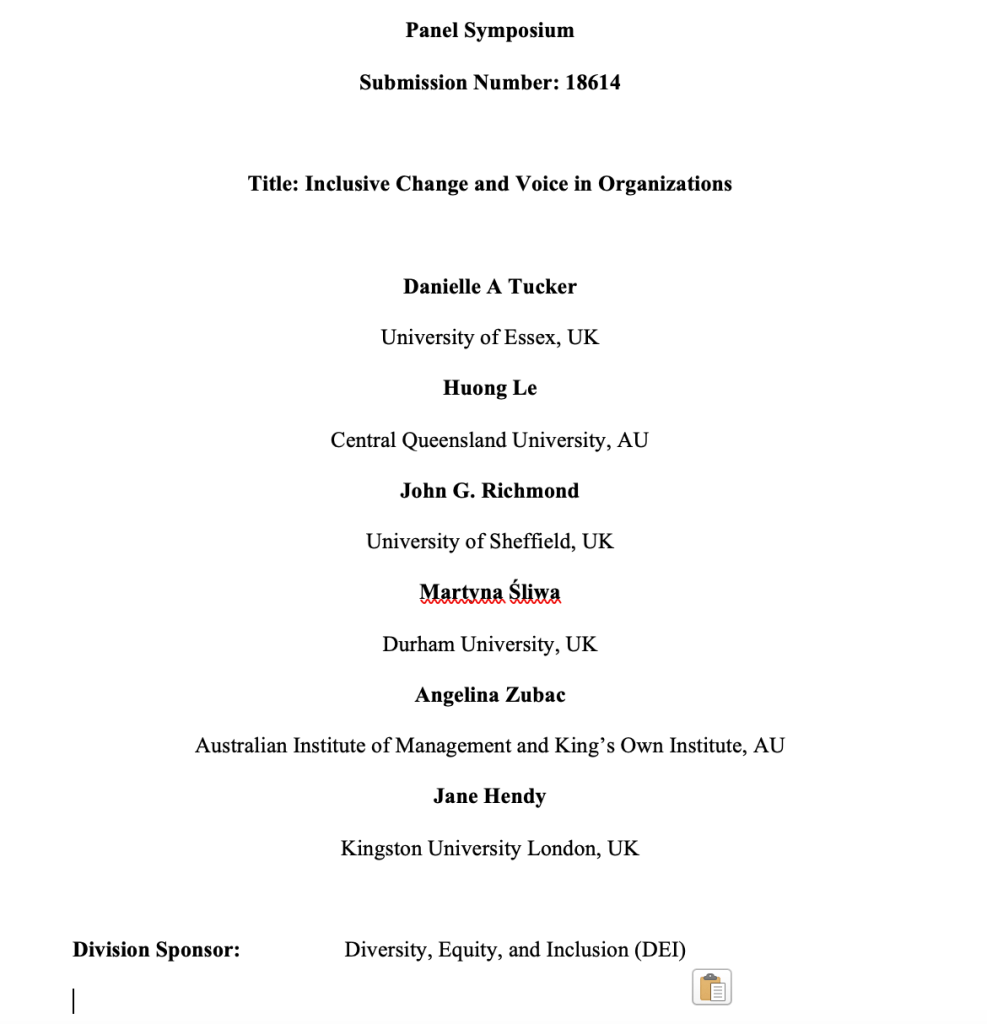
Inclusive Change and Voice in Organizations

I am also the organiser and session chair for a panel symposium: Inclusive Change and Voice in Organizations which has been an emerging area of interest for me. The symposium is sponsored by the Diversity, Equity and Inclusion division of the Academy of Management and will explore processes of organisational change that can create or foster inclusion by exploring how well established organizational practices within organizations and broader institutionalised discourses of change management have the potential to manifest systems of power based on gender and/or race. This symposium aims to explore how the practices may impact the experience of organizations for marginalized groups. 

I will be joined by an amazing panel, including Huong Le, Central Queensland University, AU; John G. Richmond, University of Sheffield, UK; Martyna Śliwa, Durham University, UK; and Angelina Zubac, Australian Institute of Management and King’s Own Institute, AU. The members of the panel originate from a wide range of academic disciplines providing perspectives from Human Resource Management, Equality, Diversity and Inclusion, Employee Voice, Organizational Strategy and Change Management. 

The purpose of this panel symposium is to engage a group of panelists in a formal, moderated, interactive discussion of the following questions:

  • Who has a voice in the change process and who does not? Who stays silent and why? 
  • What is the impact of silencing certain voices in the organizational change process?
  • How effective are traditional methods of consultation and participation in the change process at achieving representative feedback, particularly from minority groups?
  • How might the actions of change agents help or hinder this process?

I hope that this symposium we be a forum to share ideas and explore potential research gaps in this area. I am working on future plans for a special issue and other events to continue this conversation.

Any attendees of #AOM2024 are welcome to join us, or if you cannot attend but are interested in future work in this area, please feel free to contact me.

See you in Chicago 2024!

People are talking about the way our book reframes resistance to change

One of the core themes of our book is about inclusion. This is a theme throughout the book, however, one particular conversation was particularly resonating with reviewers, colleagues and readers at our book launch event earlier this year.


We discuss what inclusion means in relation to resistance to change. We introduce students to traditional theories of resistance to change, but also wanted to challenge what it means to label individuals as ‘resistors’ We ask the following questions:

❓ Are we sure that change makers and change leaders are always correct? , and, on the contrary, are we sure that resisting employees are always wrong?
❓ Are we sure that we are really reaching the people who know the most about the kind of change actions needed to achieve this change?
❓ Are we inadvertently diminishing the voices of some employees or privileging the voices of others?

We argue that engaging with resistance is about creating dialogues with people and establish fair analytical business practices.

At our book launch Ian Roper, Reader in Organisation Studies and HRM at Essex Business School commented “These are the right questions! Don’t see these in conventional change management textbooks”

We discussed at length the way that we talk more subtly about resistance to change. We questioned what it means for an employee to raise an issue or ask a question. Is it just because they want clarity? Is it because they’re raising a genuine issue that we should be listening to? Or is it an objection based on very good reasons.

Photo by Katerina Holmes on Pexels.com


Victoria Collier, a change management consultant who was a reviewer of our book commented:

“I 100% agree with this perspective. Whenever I’m running a transformation program and we’re at the engagement stage the worst thing in the world is apathy. And so, if you are in a session and there aren’t excited people who are either passionately agreeing or passionately disagreeing, Nobody cares. That either means you’re not making enough of an impact. Or it means that they’re so disengaged they’ve switched off completely. And so for me, I would much rather have lots of questions, even though they may be challenging questions that I can’t answer than quiet because then at least you can address them”

She went on to reflect on how, as change makers, we might need to adjust our mindset about resistance to change:

“As a change maker, as humans, we are the people running the sessions. We often feel we have our own internal emotional turmoil around, how we look and how we’re perceived, and how we’re handling the session and that can be a distraction. What we need to do is be stepping out of our own emotions and trying to reframe our mindset that these questions are good things, they add value.”

Get your copy from Amazon or from Sage directly

How 15 years of change management research informed our book

Textbooks are often viewed as not being research-led. But in my experience this is not the case.

Writing our new book on Organizational Change Management: Inclusion, Collaboration and Digital Change in Practice has been an opportunity for me to pull together a lot of research ideas that I have been working on for many years. It reflects the research studies examining organisational change in many organisations, together with the practices I have used to communicate and teach students and the influences I have gained from working on knowledge exchange projects with key industry and public sector partners.


Here are the top three ways that research informed the content of this book:

🔔 The change agency approach which underpins the book was inspired by my Innovation Fellowship with the British Academy – in turn drawing from 10 years of researching organisational change employees.

🔔 The choice to focus on the experiences of change makers was inspired by my most highly cited article: The importance of role sending in the sensemaking of change agent roles, published in Journal of Health, Organization and Management. Although this paper is published in a specialist healthcare management journal, it is by far the paper than I get the most questions about and has directly led to being consulted by organisations on how to improve the change maker experience in organisations. In writing this book, I hope to bring this research to a wider audience and share this message even further.

🔔 All of the case studies in this book are adaptations or retellings of real life organisational change projects that my co-authors and I have studied. As active researchers we are able to test our theories and contextulise our key messages in these cases. By providing these case studies as learning tools we hope to help students do the same.

Get your copy from Amazon or from Sage directly

Webinar: For the organisation or against it? How change agents within organisations make sense of their role and develop the skills they need to manage change

Last month, I really enjoyed giving a webinar on ‘For the Organisation or Against it? How change agents within organisations make sense of their role’ as part of the Essex Business School Post Graduate webinar series. Really good engagement from prospective students.


We discussed:
💡 why becoming a change maker in organisations is a daunting task but one full of opportunity
💡 why a change agency approach to change allows change makers and organisations to be more prepared for change
💡 how identity ambiguity in change managers, if not resolved, can lead to poor change outcomes and dissatisfied change makers

Organised by Emily Dale, the webinar series showcases the research interests of academics at Essex Business School.

If you missed out on the series, you can download presentation slides from the webinar here


Who are change makers and what do they do?

Our new book on Organizational Change Management: Inclusion, Collaboration and Digital Change in Practice offers advice to #changemakers – but who are change makers and what do they do?

Our approach puts the change experience as the starting point, so that we can identify targets and lessons for current and future professionals who become change makers.


As a writing team we had quite a lot of debate about what to call the people who were our target audience for this book. In previous literature (including our own research) we often talk about change agents. We debated this term, we talked about calling them champions, we talked about more generally targeting middle managers or change leaders or change managers, and eventually we landed on the term ‘change maker’, who we defined as someone who becomes the architect and builder of change in organizations.

Photo by Markus Spiske on Pexels.com

To MAKE change is to construct, create, and concoct something out of the resources that are available. We wanted a term that we felt encapsulated the creative and collaborative role that these individuals play within organizations that captured the value that they add to the change process.

Change makers are proactive and purposeful in promoting, enabling change in organizations. They imagine creative ideas and craft innovative solutions to problems, and they engage in collaborative work and processes and organizational redesign.

Change Makers play a pivotal role in change implementation. But they’re also bounded by the ultimate decision-making power of others: senior leaders, executives, business owners often determine change strategy, but Change Makers are the ones that implement it and put it into practice.

So this is a book written for Change Makers in organisations today and the future Change Makers in our classrooms. This is a book to teach you how to manage creativity, power and resistance; how to lead, include, listen and shape others; how to collaborate and evaluate; and how to make change from within organizations.

Get your copy from Amazon or from Sage directly

How our book on Organisational Change Management came about

Ever wondered how books like Organizational Change Management: Inclusion, Collaboration and Digital Change in Practice come about?

Here is our story…

Over the years I have ordered lots of inspection copies from publishers like Sage on Organisational Change trying to find a textbook that I could use to support my students on a variety of change management related modules that I have taught over the course of my academic career. I’d never really had a core textbook that I used across the whole module because I could never find one that I really liked enough to make it the core text. Instead, I was using a a selection of chapters from a variety of different books, as well as lots of journal articles and case studies for students.

When I described this challenge to a commissioning editor at Sage about three years ago, she asked me “What was I looking for that I couldn’t find? What what was missing?”

Really, I was looking for two key things.

Firstly, I couldn’t find a book that I felt really appreciated the real world complexity of change in organizations and the variety of issues that I’d seen within my research. I couldn’t find anything that dealt holistically with change as I witnessed it being experienced.

Secondly, I felt that a lot of change management books assumed that practitioners have a lot more control over the strategic decisions than I felt was the reality from people who I was interviewing in my research, who were doing change management and organizations.

After some time and further reflection, together with Paul Richard Kelly and Stefano Cirella we decided to put together a proposal for a book that filled these gaps.

…and then… quite simply… we wrote it!

Get your copy from Amazon or from Sage directly

One question we keep getting asked is about the choice of cover for our new book.


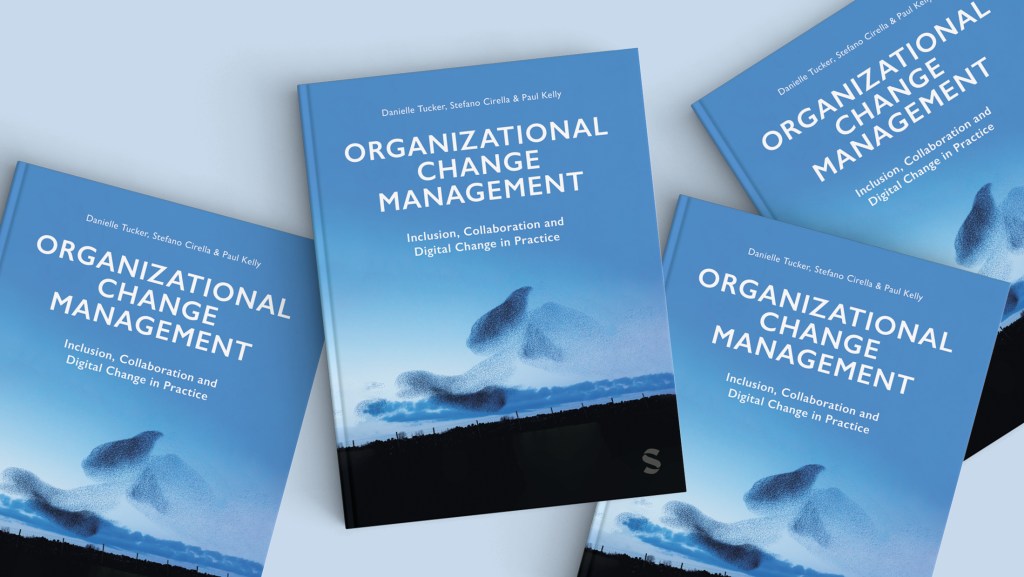
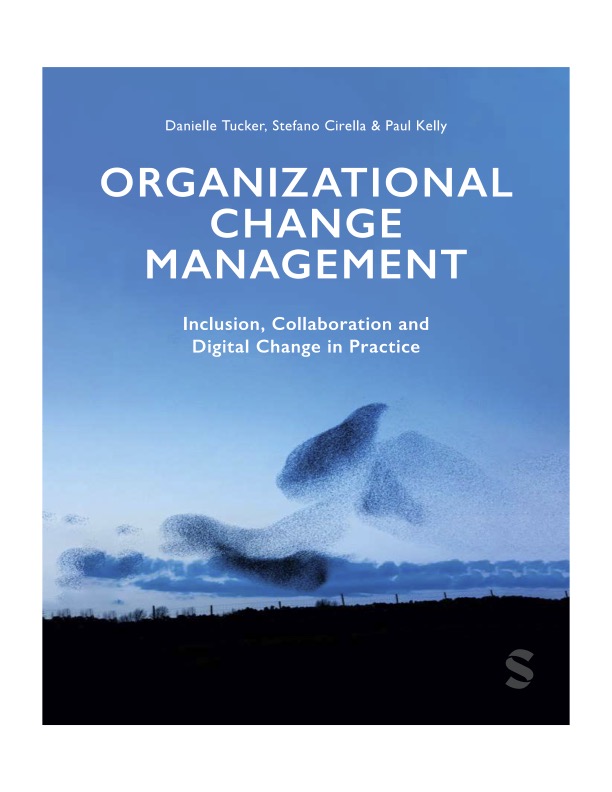
The answer: the cover image, which depicts a flock of birds changing direction, is metaphor for change. The flock of birds are so far away in the distance that they appear as a collection of dots on the horizon. You cannot see independent movement of bird’s change of direction, the effort or it’s struggles, all we can see at this distance is the movement of the flock together. This occurs through coordination with others – collaboration, interacting with others.

This resonates with the idea of flocks as complex systems by Giorgio Parisi (see Parisi, 2023), winner of the Nobel Prize in Physics in 2021. “When the flock was turning, the impression that one has is that they are turning as a flock, but the reality is that some birds start to turn in advance and the others follow. We were able to get the acceleration of each bird and to see that some birds start to accelerate or turn in one direction and other birds follow and that this decision was propagating inside the flock” (Parisi in Fox, 2023).

Organizational Change Management: Inclusion, Collaboration and Digital Change in Practice 

Available now from Sage or Amazon

Inspired by our own MSc programme and the research of the co-authors, this book offers a holistic introduction to Organizational Change Management through a distinct and timely perspective of organizational change agency. It takes a highly practical and unique approach, with cutting-edge chapters on digital transformation, creativity, power and inclusivity and diversity. Our approach places change experience as a starting point. It identifies and targets lessons for current or future professionals who become change makers. Such individuals play a pivotal role in change implementation but are bounded by the ultimate decision-making power of others, typically senior leaders, executives or business owners. This focus means we place relationships and people at the heart of organizational change and offer practical training to help develop skills of communicating change; learning about change; influencing key stakeholders; handling digital data and information; consulting, supporting and exploring. We discuss not simply how to ‘do change’, but how to understand the implications of organizational changes.